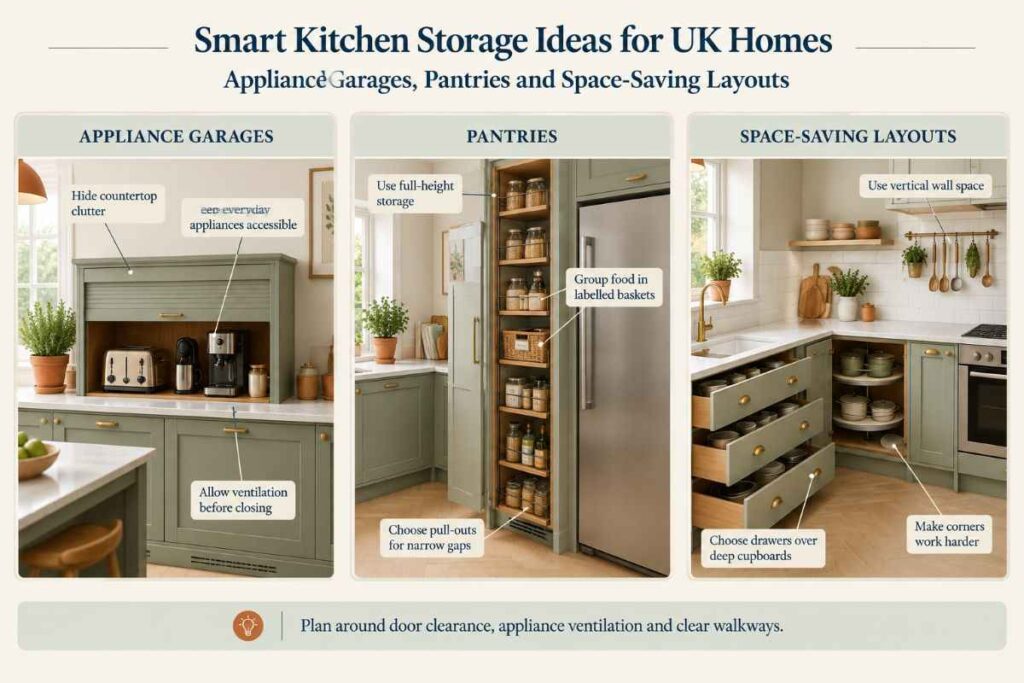
A small kitchen does not always need more cupboards. Often, the real problem is that everyday appliances occupy the worktops, deep shelves hide food at the back, and awkward corners waste valuable space. The right kitchen storage ideas can make a UK kitchen easier to use without requiring a complete renovation.
From concealed appliance garages and slimline pantry cupboards to better drawer layouts and clever use of vertical space, there are practical solutions for flats, terraced houses, new-build homes and larger family kitchens. The key is to plan storage around how you cook, shop and move through the room—not simply to fit in as many cupboards as possible.
1. Create an Appliance Garage to Clear the Worktops
An appliance garage is a dedicated cupboard, usually positioned at worktop height, where small appliances can be stored out of sight but kept easy to reach. Depending on the design, it may have a roller shutter, bi-fold door, lift-up front or pocket doors that slide away.
It is particularly useful for appliances that you use regularly, including:
- Kettles and toasters
- Coffee machines and milk frothers
- Blenders and food processors
- Stand mixers
- Bread makers and other breakfast appliances
Choose the right appliance garage layout
A compact cupboard beside the kettle can work as a simple tea and coffee station. In a larger kitchen, a wider unit can provide space for several appliances, mugs and everyday ingredients.
Before installing one, measure the height and depth of every appliance, including any lids or attachments that need to remain fitted. Check that the doors can open fully without obstructing nearby cupboards or walkways.
Safety matters: appliances that generate heat or steam need suitable clearance and ventilation. Do not operate a kettle, toaster or other heat-producing appliance inside a closed cupboard unless the design and manufacturer instructions specifically permit it. Electrical sockets, cable access and ventilation should be planned properly.
Appliance garages are especially useful in open-plan kitchens, where cluttered worktops can make the entire living area feel untidy. For a more integrated appearance, match the doors to the surrounding cabinetry.
2. Make a Small Pantry Work Harder
You do not need a walk-in pantry to organise food properly. A tall cupboard, a narrow pull-out unit or a well-arranged section of existing cabinetry can provide a practical pantry for most households.
Recent UK kitchen design coverage highlights slimline, concealed and pull-out pantry solutions as useful ways to maximise storage in compact rooms.
Consider these options:
- Tall pantry cupboards: Use the full height of the room to store tins, packets, baking supplies and less frequently used ingredients. Adjustable shelves allow you to change the layout as your needs change.
- Pull-out larder units: These slide out to reveal stored items, helping you see what is available without reaching into a deep cupboard. Check the usable width and weight limits before choosing a system.
- Narrow pull-out storage: A slim unit can make use of a suitable gap beside a cabinet or appliance. Measure carefully because the gap must accommodate the complete unit and its runners.
- Freestanding pantry cabinets: A larder cupboard or suitable sideboard can add storage without replacing the fitted kitchen. This can be a practical option for rented homes, provided there is enough room for doors and drawers to open.
Organise pantry shelves by use
Keep everyday foods between waist and shoulder height where possible. Put heavier items on lower shelves, and reserve higher shelves for lighter products you use less often.
Use clear, food-safe containers for ingredients that benefit from being grouped. Label them clearly and follow storage instructions on the original packaging, especially for foods with specific handling requirements.
A useful rule is to place newer stock behind older stock. This makes it easier to use what you already have before opening another packet.
3. Replace Hard-to-Reach Cupboards with Better Drawer Storage
Deep cupboards often waste space because items at the back become difficult to reach. Pull-out drawers can solve this problem by bringing their contents towards you.
For new kitchens, consider wide drawers for pans, plates and food containers. For existing cabinets, internal pull-out baskets or drawer inserts may improve access without replacing the entire unit.
Useful options include:
- Pan dividers: Store pans and lids vertically instead of stacking everything together.
- Cutlery organisers: Give utensils a fixed place and reduce clutter in shallow drawers.
- Adjustable dividers: Separate food containers, baking tools and small kitchen accessories.
- Shelf risers: Create a second level for mugs, bowls, tins or spices where there is sufficient clearance.
- Pull-out trays: Improve access to items stored in deep base cabinets.
Which? also recommends pan organisers, shelf risers and pull-out drawers as practical ways to make existing kitchen cupboards easier to use.
Before buying organisers, empty the cupboard and measure its internal width, depth and height. Check for hinges, pipes and drawer runners that might reduce the usable space.
4. Use Vertical Space Without Making the Kitchen Feel Crowded
When floor space is limited, the walls and the inside of cupboard doors can provide useful additional storage.
A few well-placed additions can free up worktop and drawer space:
- Fit a rail for frequently used utensils.
- Use hooks for mugs or suitable lightweight kitchen tools.
- Install a magnetic knife strip in a safe, accessible position.
- Add a shelf for spices or cooking ingredients near the preparation area.
- Fit a suitable rack inside a cupboard door for lids, foil or cleaning accessories.
Open shelving can also work well for everyday plates, glasses or attractive storage jars. However, too many exposed items can make a small kitchen look busy and require more frequent dusting and cleaning.
Keep heavier items securely supported and use appropriate fixings for the wall type. If you rent, check your tenancy agreement before drilling or making permanent changes.
5. Make Awkward Corners and Narrow Gaps Useful
Corners and narrow spaces are often overlooked during kitchen planning. The best solution depends on the shape of the existing units and how much access you need.
- Corner cabinets: Rotating shelves or pull-out corner systems can improve access to pots, pans and small appliances. Check the mechanism’s usable storage area rather than judging it by the cabinet’s external size.
- Space beside the fridge: A properly sized slim pull-out unit can hold packets, spices or other small items. Leave the ventilation clearances required by the fridge manufacturer.
- Under the sink: Use a compact organiser to separate cleaning supplies, cloths and bin bags. Choose a design that accommodates the plumbing and allows you to spot leaks quickly.
- Toe-kick drawers: Where the cabinetry allows, shallow drawers beneath base units can store flat items such as baking trays or placemats. These usually require more careful planning than removable organisers.
- Kitchen trolleys: A mobile trolley can provide extra storage and a temporary work surface. It is useful in rented homes or kitchens where permanent cabinetry is not practical.
The aim is to recover space without making cupboards harder to open or creating obstacles in the main walking route.
6. Plan Storage Around Your Kitchen Layout
Storage works best when items are kept close to the place where they are used. Organising the kitchen by task can improve everyday convenience without requiring any new furniture.
| Kitchen area | What to store nearby | Useful storage solution |
|---|---|---|
| Cooking zone | Pans, utensils, oils and spices | Deep drawers and pan dividers |
| Preparation zone | Chopping boards, knives and mixing bowls | Drawer inserts and wall rails |
| Tea and coffee area | Mugs, coffee, tea and small appliances | Appliance garage or breakfast station |
| Food storage zone | Tins, packets and baking ingredients | Pantry cupboard or pull-out larder |
| Cleaning zone | Clothes, detergents and bin bags | Under-sink organiser |
| Dining or serving area | Plates, glasses and serving dishes | Wide drawers or accessible cupboards |
For a narrow galley kitchen, prioritise clear work surfaces and easy access to frequently used items. In an L-shaped kitchen, make corner storage more accessible and keep preparation space clear. In a kitchen with an island, use its drawers for serving dishes, cookware or other items that suit the island’s location.
For open-plan spaces, concealed storage can create a calmer appearance. However, do not sacrifice everyday access simply to hide everything behind doors.
7. Make Kitchen Storage More Affordable
A more organised kitchen does not have to start with a full refurbishment. Begin with changes that use your existing cupboards and shelves.
Try this order:
- Remove expired food, duplicate utensils and appliances you no longer use.
- Move frequently used items to accessible shelves and drawers.
- Group similar items in baskets or containers.
- Add shelf risers, drawer dividers or pan organisers where measurements allow.
- Consider new cabinetry only after identifying the storage problems that remain.
For a larger project, compare the cost of replacing a cupboard with the cost of fitting internal drawers or pull-out storage. Ask installers what is included in any quotation, including hardware, fitting and changes to existing cabinetry.
If you are planning a new kitchen, decide where appliances, food, cookware and cleaning supplies will live before finalising the cabinet layout. This is often easier than trying to correct an inconvenient arrangement later.
Frequently Asked Questions
What are the best kitchen storage ideas for small UK homes?
Start with better drawer organisation, full-height pantry cupboards, shelf risers and vertical storage. An appliance garage can also clear worktops. Choose solutions that fit your existing layout rather than buying organisers before measuring the available space.
What is an appliance garage in a kitchen?
An appliance garage is a cupboard or enclosed storage area designed for small appliances such as kettles, coffee machines and toasters. It keeps them accessible while concealing them when not in use. Heat-producing appliances must be used with suitable ventilation and in line with manufacturer instructions.
How can I add pantry storage without a walk-in pantry?
Use a tall larder cupboard, a narrow pull-out unit, a freestanding cabinet or an organised section of existing cupboards. Adjustable shelves and clear containers can help you see food more easily and reduce forgotten ingredients.
How do I organise deep kitchen cupboards?
Group similar items, use pull-out drawers or baskets, and place frequently used products near the front. Shelf risers can help with smaller items, while vertical dividers are useful for pans, lids and baking trays.
How can I improve kitchen storage on a budget?
Declutter first, rearrange items by task, and add inexpensive organisers only where they solve a clear problem. Shelf inserts, drawer dividers and suitable under-sink storage can improve existing cupboards without a full kitchen renovation.
Final Thoughts
The most useful kitchen storage ideas make everyday tasks easier, not just the room look tidier. Appliance garages help control worktop clutter, pantry cupboards keep food organised, and well-planned drawers make cookware easier to reach.
Start by identifying the areas that cause the most frustration. Measure before buying anything, organise around your daily routine and invest in permanent storage only where it offers a clear benefit. Even a few targeted changes can make a compact UK kitchen more practical and pleasant to use.